

Blowing It Up
The category is... inflatable furniture in film and beyond.

This spring I was finally able to track down1 a movie that had been on my watchlist for a while, L’Écume Des Jours, a 1968 French film by Charles Belmont based on a 1947 surrealist novel of the same name. The movie isn’t entirely successful but it’s got wonderful production design, especially the scenes set in a convalescing young bride’s bedroom.
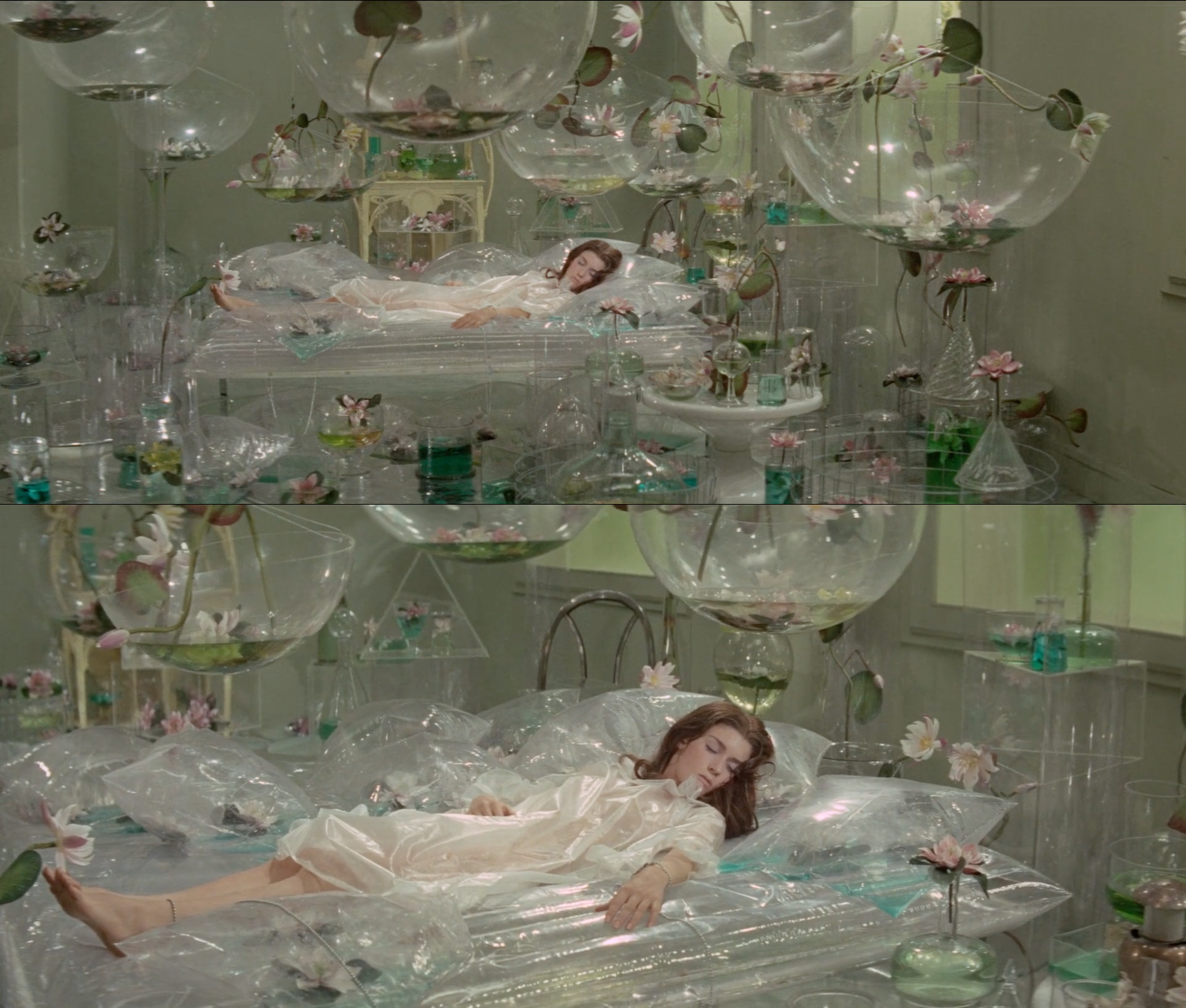
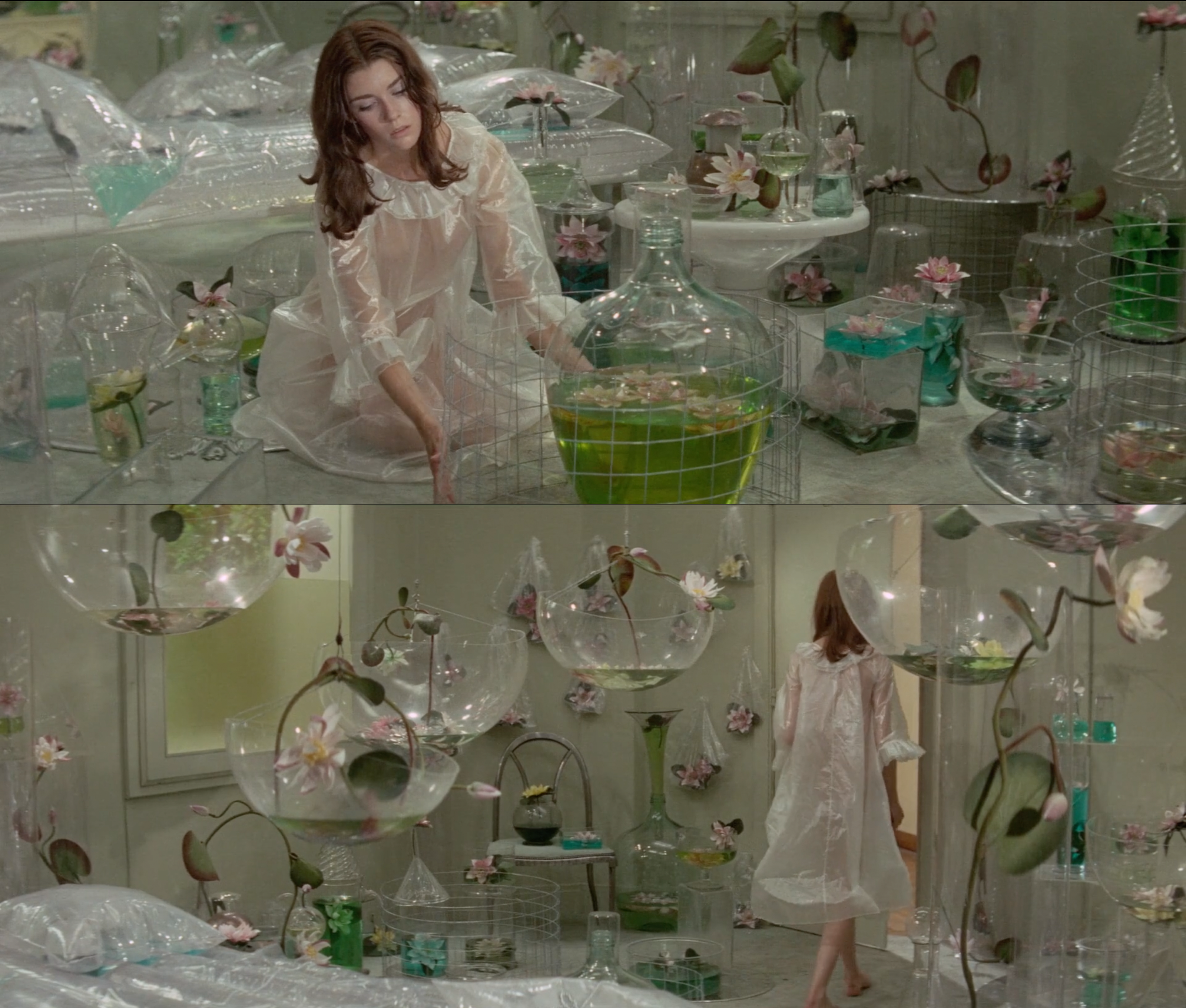
However outlandishly staged this bedroom decor may appear it’s also very much rooted in popular design trends of the time, which set me on a mission to track down other contemporary movies showcasing inflatable furniture.
I was first compelled to re-watch Radley Metzger’s Camille 2000 (1969). Now this one is also not a particularly “good” movie. It’s effectively a soft-core porno, but it has more depth than you’d expect from the genre, transposing the plot of Dumas’ The Lady of the Camellias to swinging sixties Rome. The setting provides a rich backdrop of Italian design trends - plastic fantastic and pneumatic design objects abound. As an added bonus the film has a terrific score by Piero Piccioni.
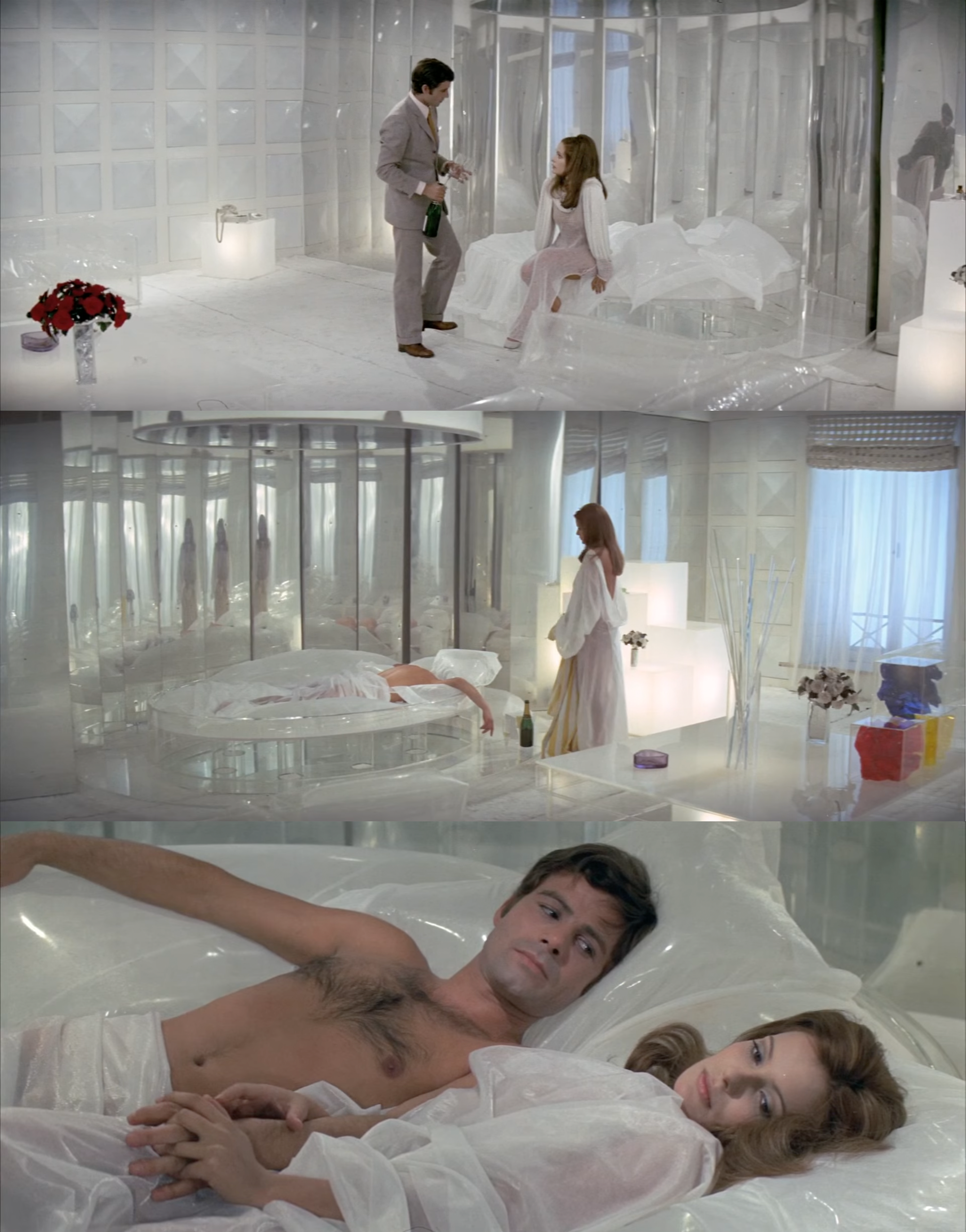
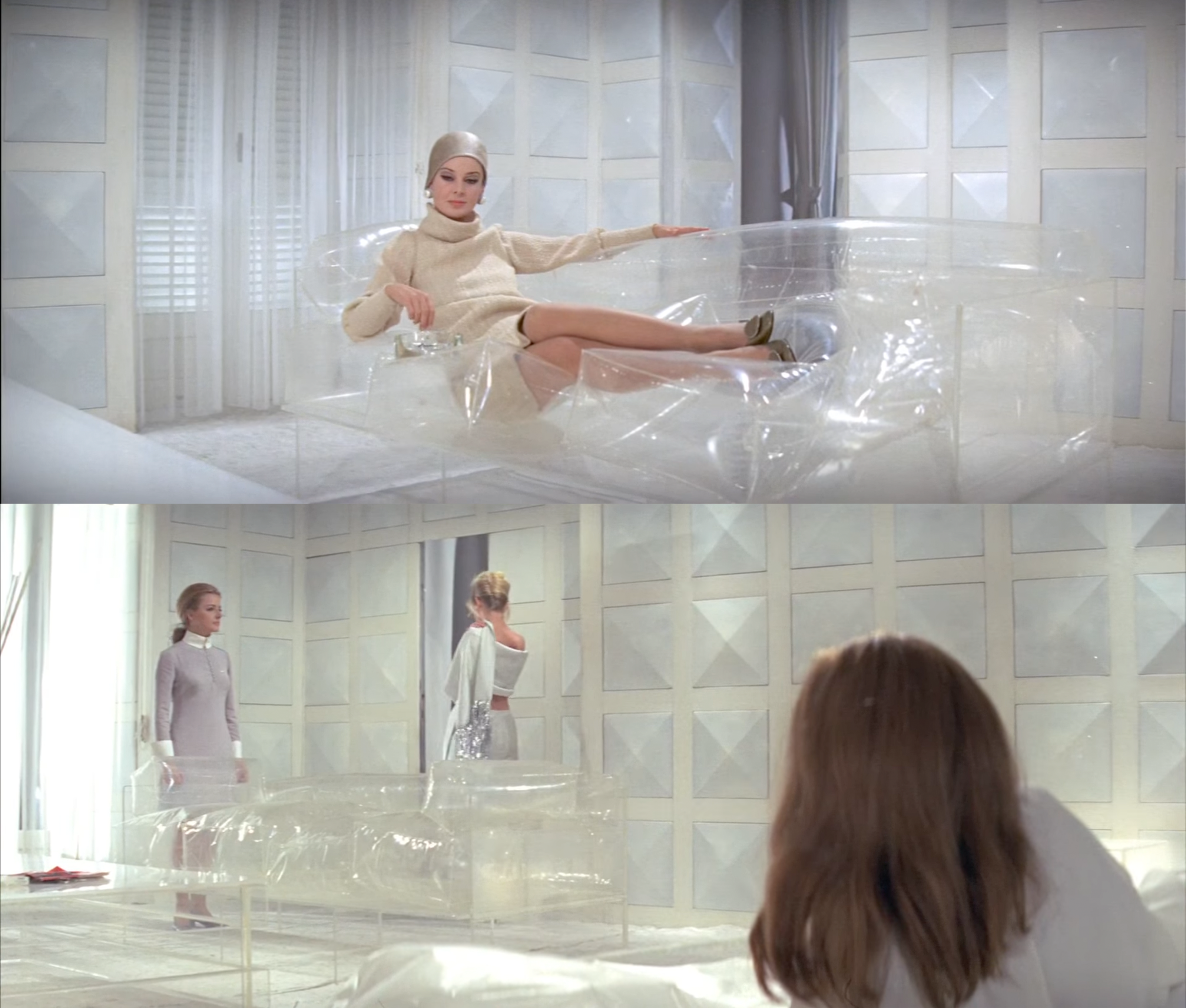
The inflatable props here engage even more directly with a language of contemporary design culture. Camille is a kept woman, a courtesan who surrounds herself with all the signifiers of taste, modernity and sexual liberation. Could the transparency of their materials signify the superficiality of her lifestyle until she discovers true love?

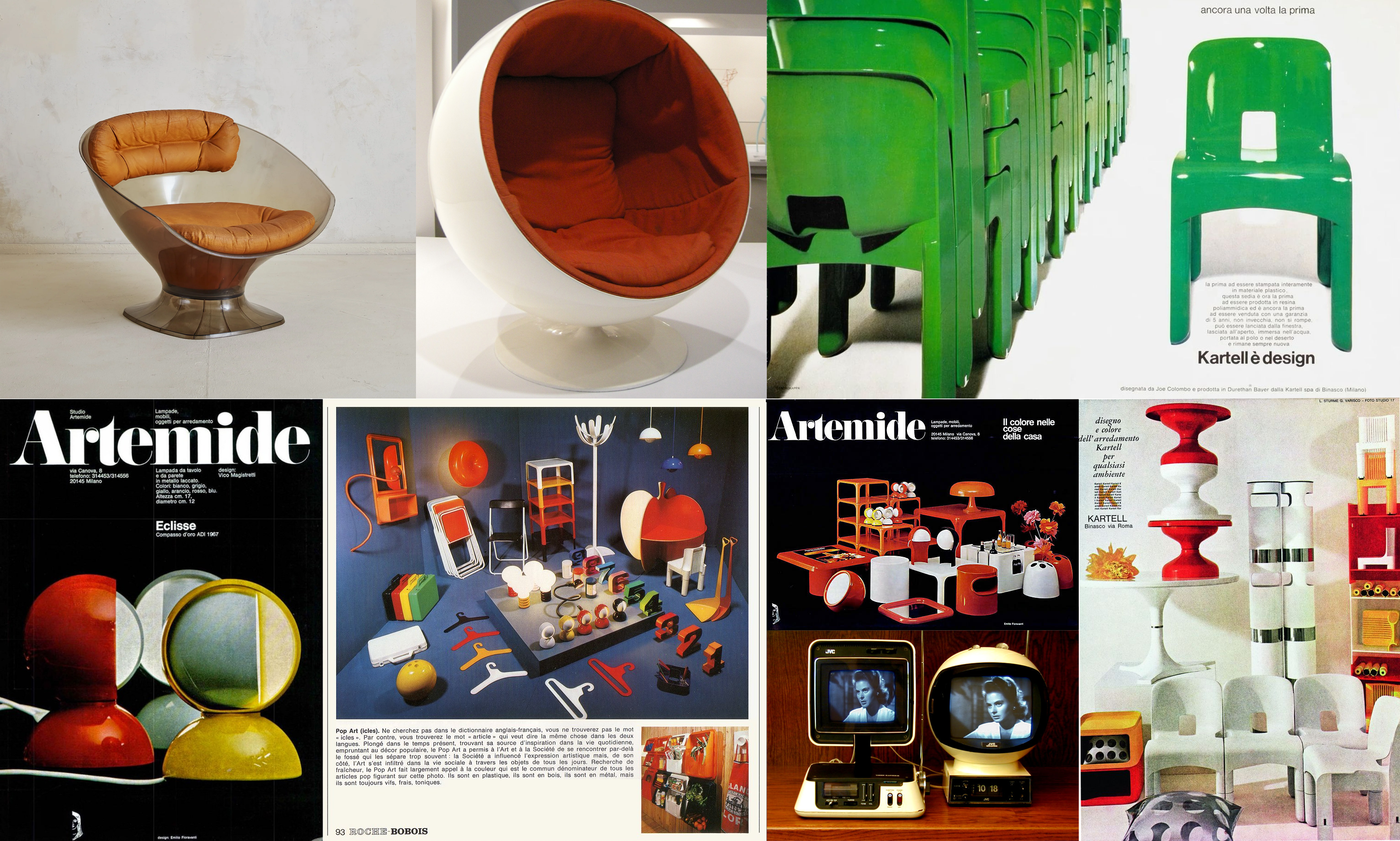
From there I went on a brief side quest looking into how exactly inflatables came to be a bonafide design vocabulary. The proliferation of plastics in the Space Age / Pop Art aesthetic of the mid-to-late 1960s coincided with numerous experiments in art & architecture building utopian blow-up environments. It was only a matter of time until furniture pieces became pneumatic too.
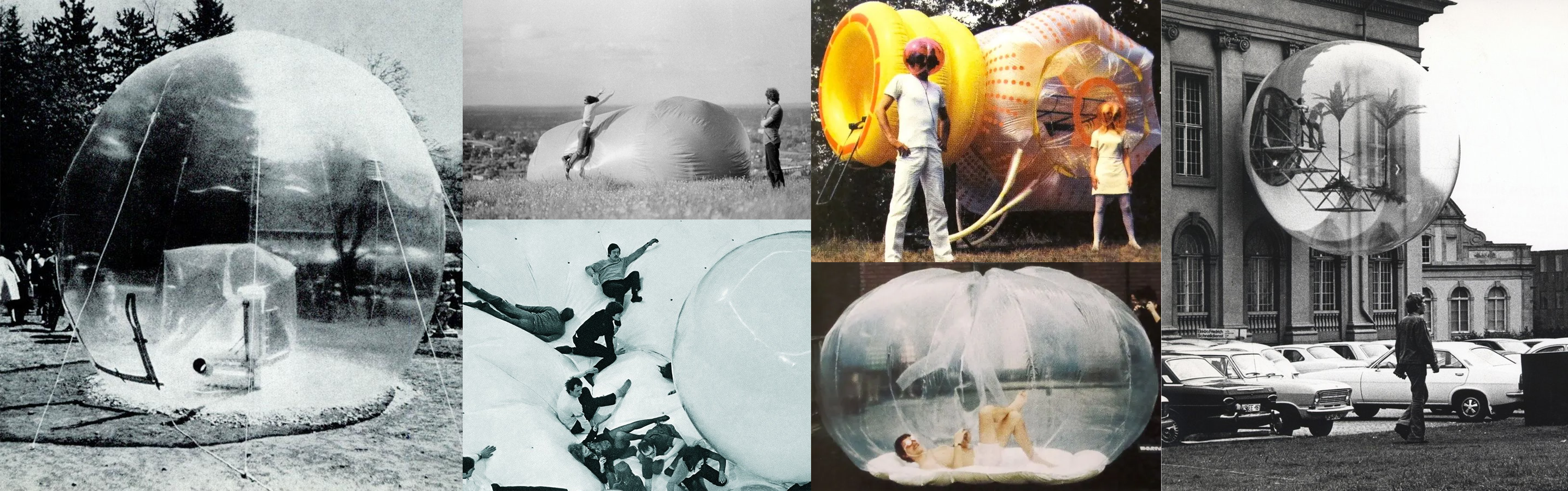
A note on inflatables & utopia — a beautiful dream isn’t it, to be floating on or in air? You’ll often see these elements at play in the production design for sci-fi or fantasy films set in the future. A great example - Roger Vadim’s 1968 Jane Fonda vehicle Barbarella.


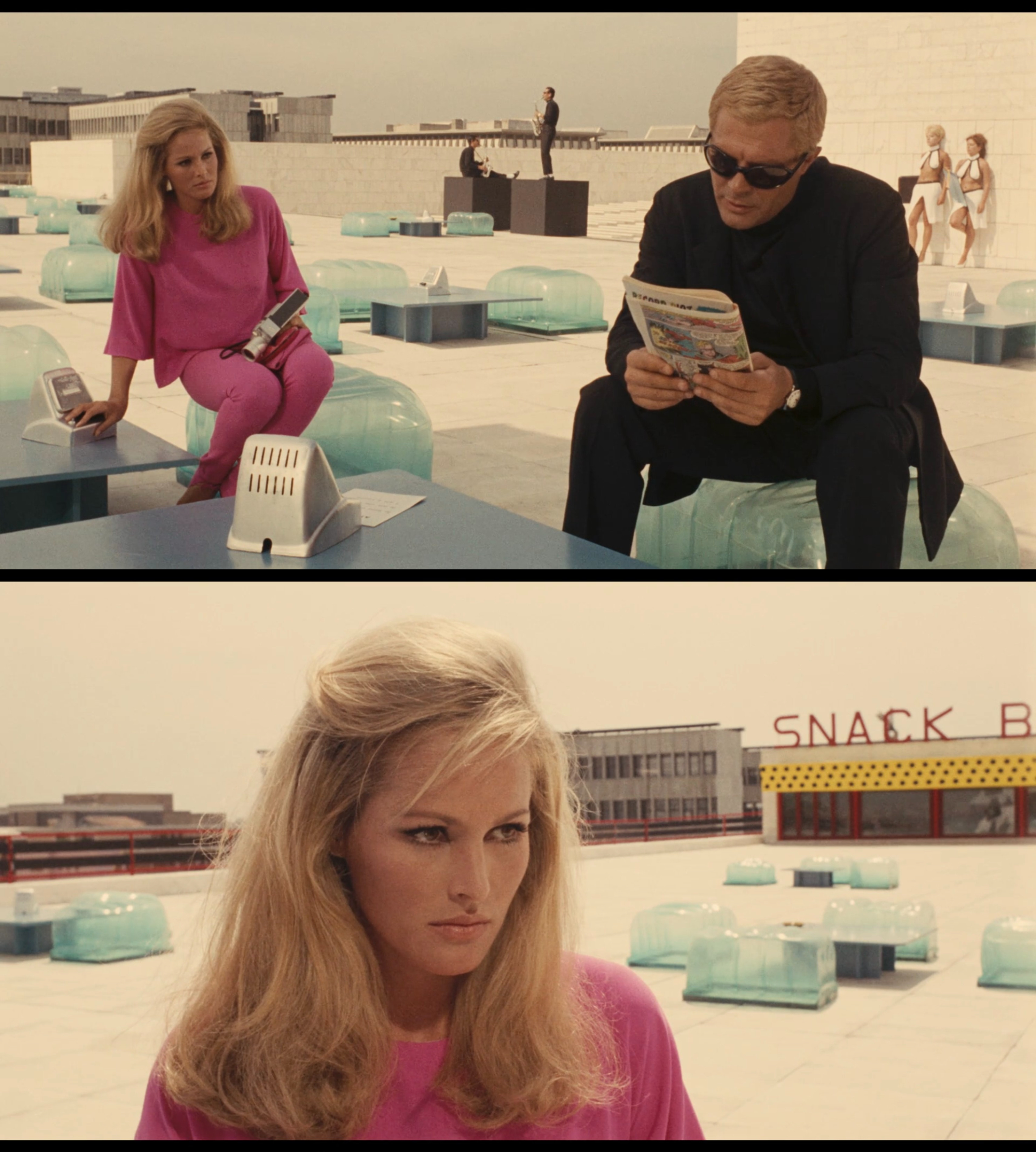
Another good example - Elio Petri’s The 10th Victim from 1965. While set in the near future it features a more true-to-the-1960s visual universe (despite the whole dystopian bloodsport-meets-population control premise) and the seats in the scene below seem almost to predict the advent of inflatable furniture as a design trend.

One of the biggest shifts IRL occurs in 1967-1968 when Vietnamese-French engineer and designer Quasar Khanh drops his Aerospace furniture line, an 11-piece inflatable PVC collection.
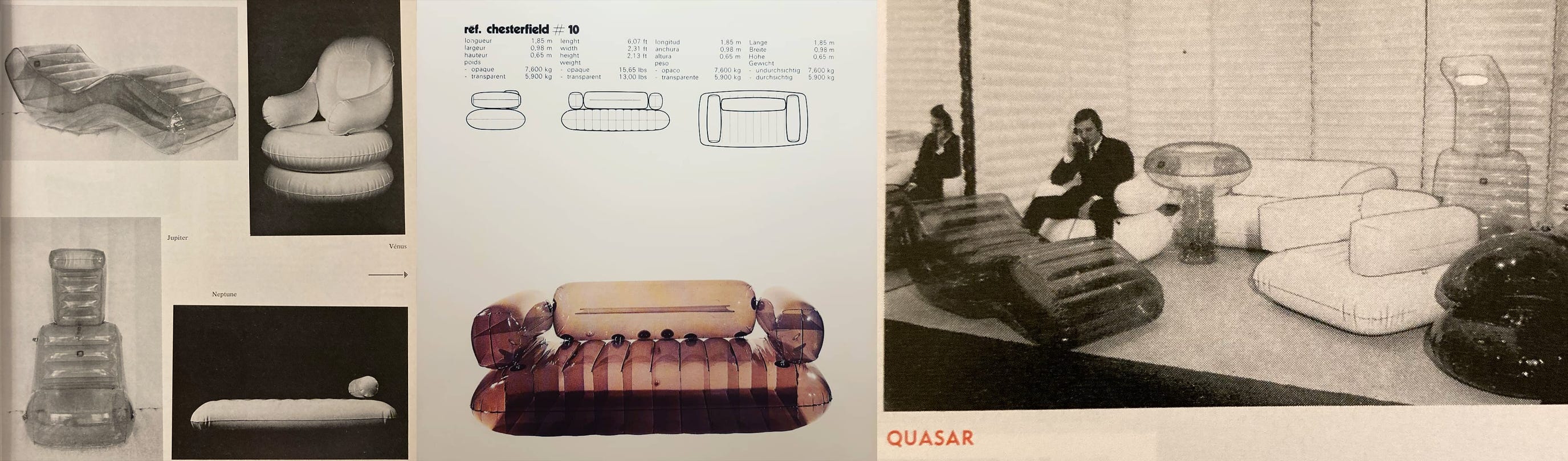
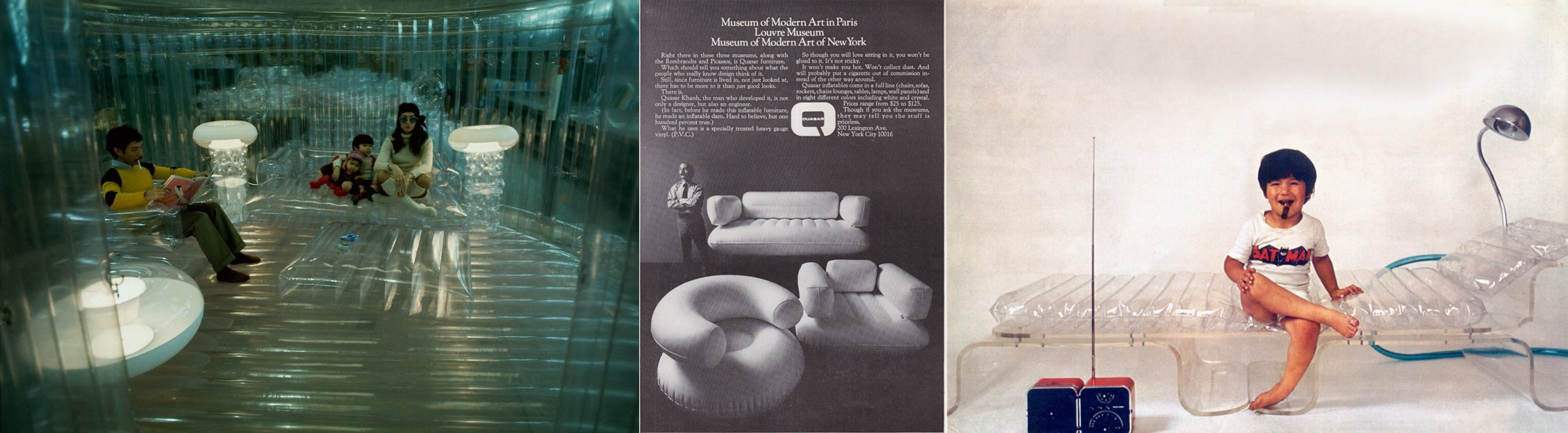
Pneumatic plastic sculptures become not only actual design items but luxury lifestyle objects once Khanh’s products take the design world by storm.
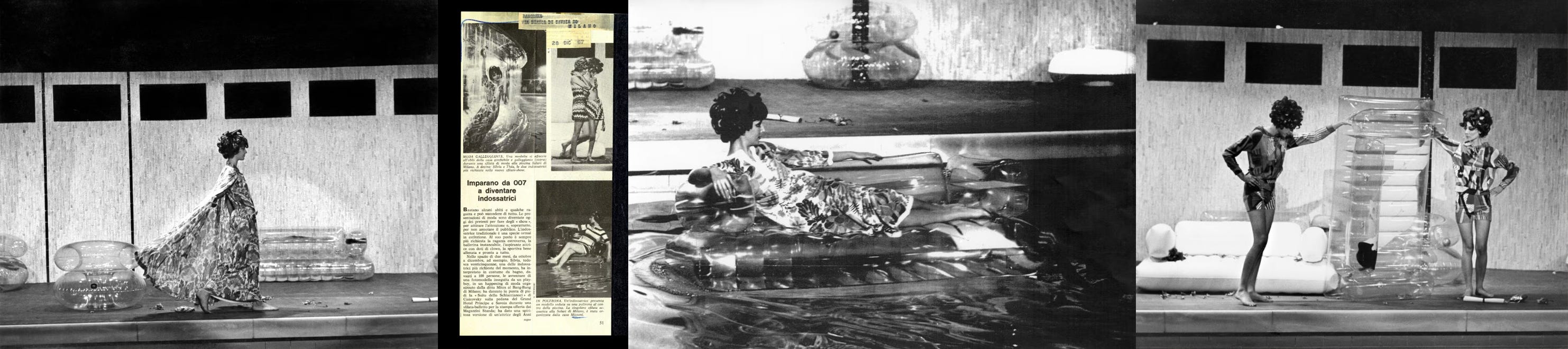
In ‘67 Missoni even presented their spring-summer collection at a fashion show mounted at a Milanese swimming pool with Khanh’s inflatable furnishings serving as important set pieces.
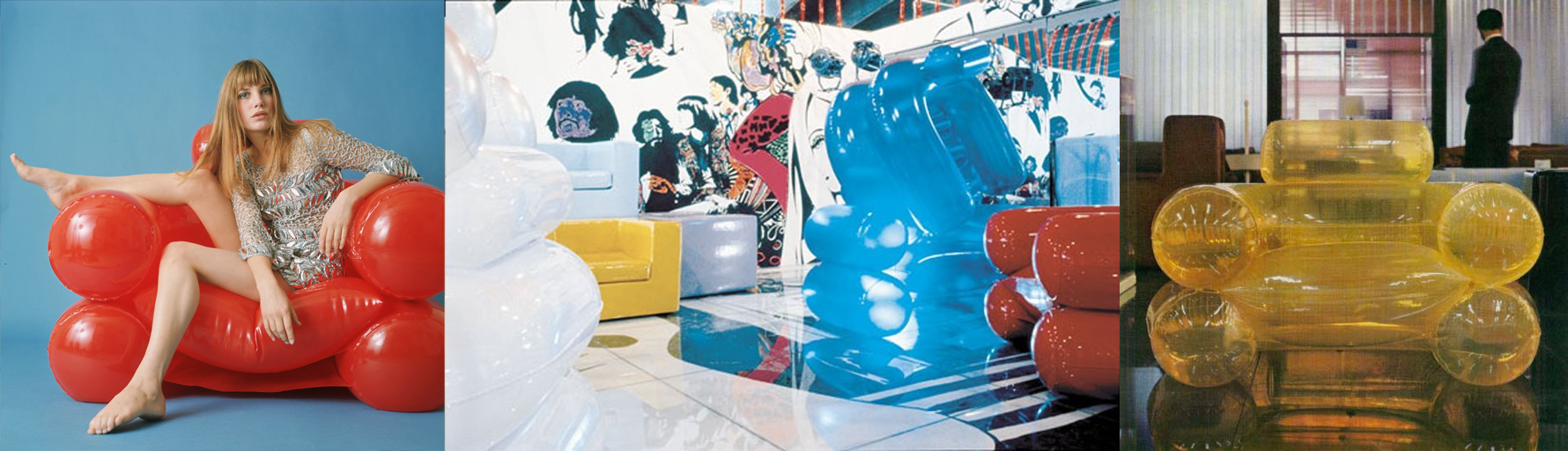
Around the same you also have the Italian design company Zanotta positing inflatables as consumer products in a big way with their famous Blow Chair.
Where I had a harder time identifying any Khanh inflatables in my plastic filmic odyssey, I was able to find multiple Blow Chairs and other Zanotta fare2 in the 1968 Italian sex comedy La Matriarca by Pasquale Festa Campanile. Side-note: this movie too has a great score.
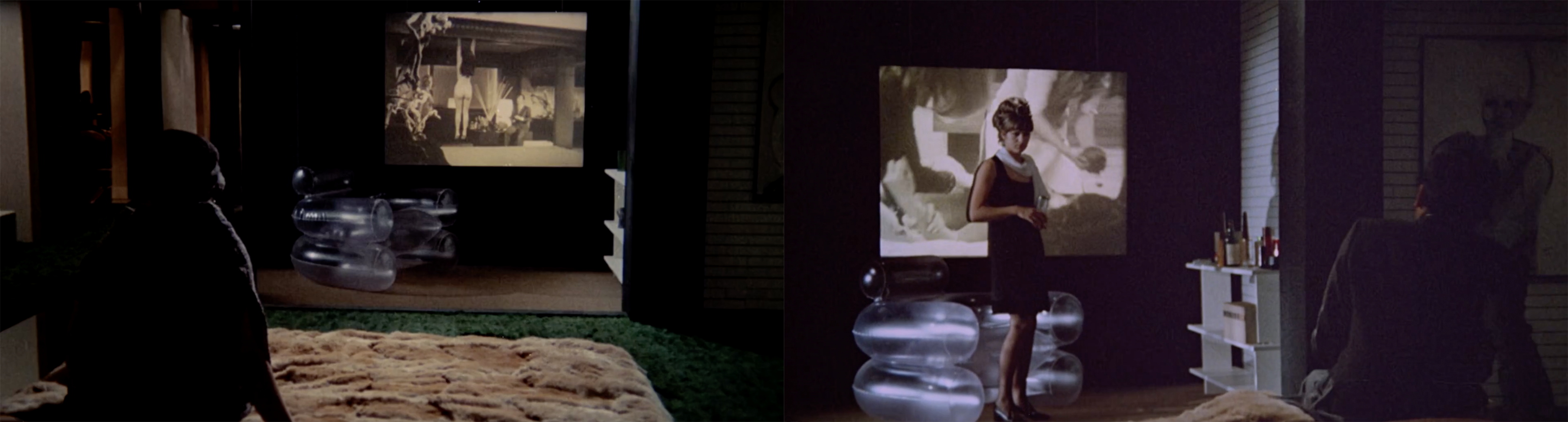
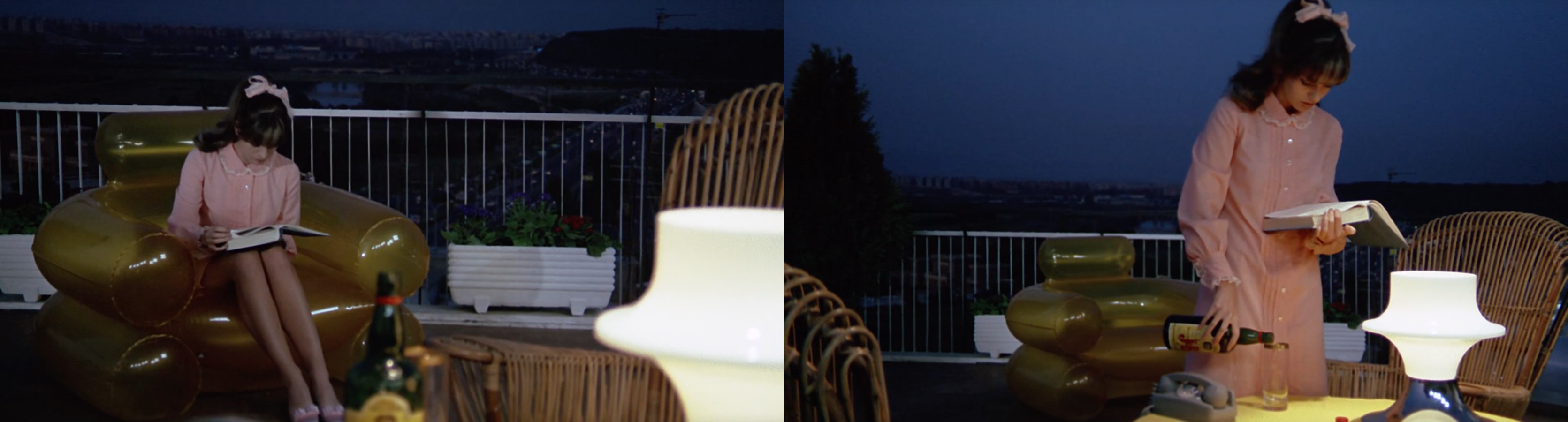
The picture-perfect Italian bourgeois housewife (at least on the surface), Mimi moves through domestic spaces in the film that are positively stuffed with Zanotta objects.
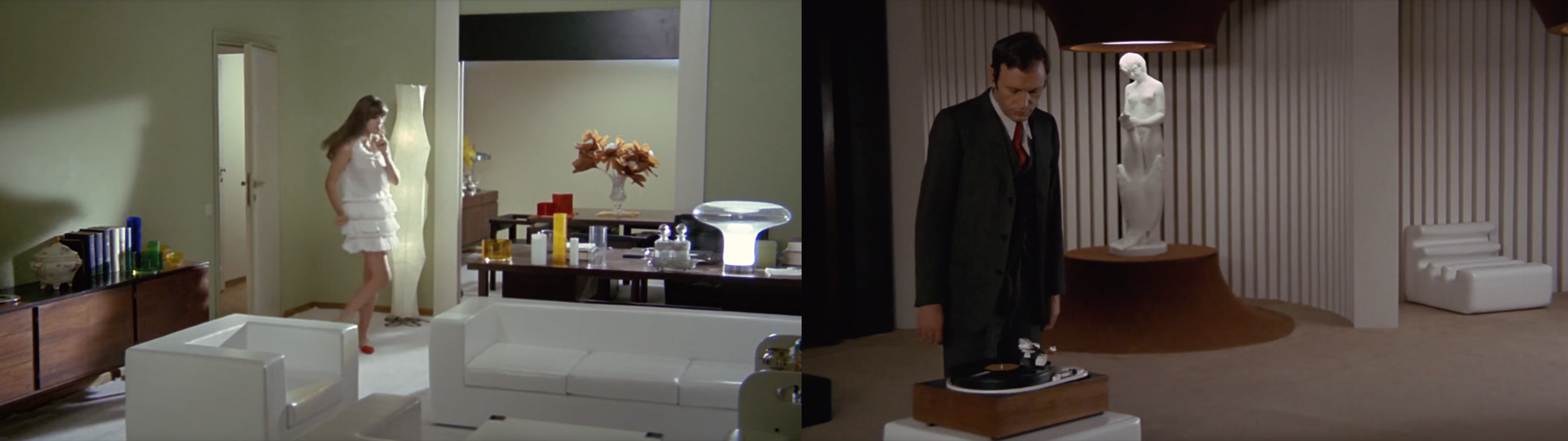
Beyond the Zanotta-mania, there are a few additional instances of pneumatic furniture.
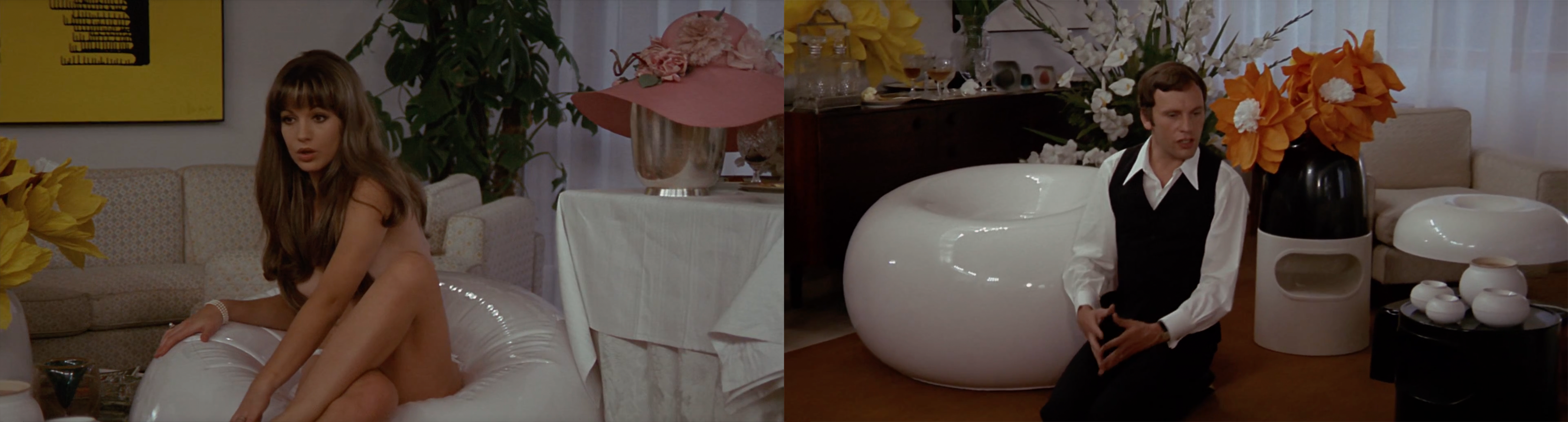
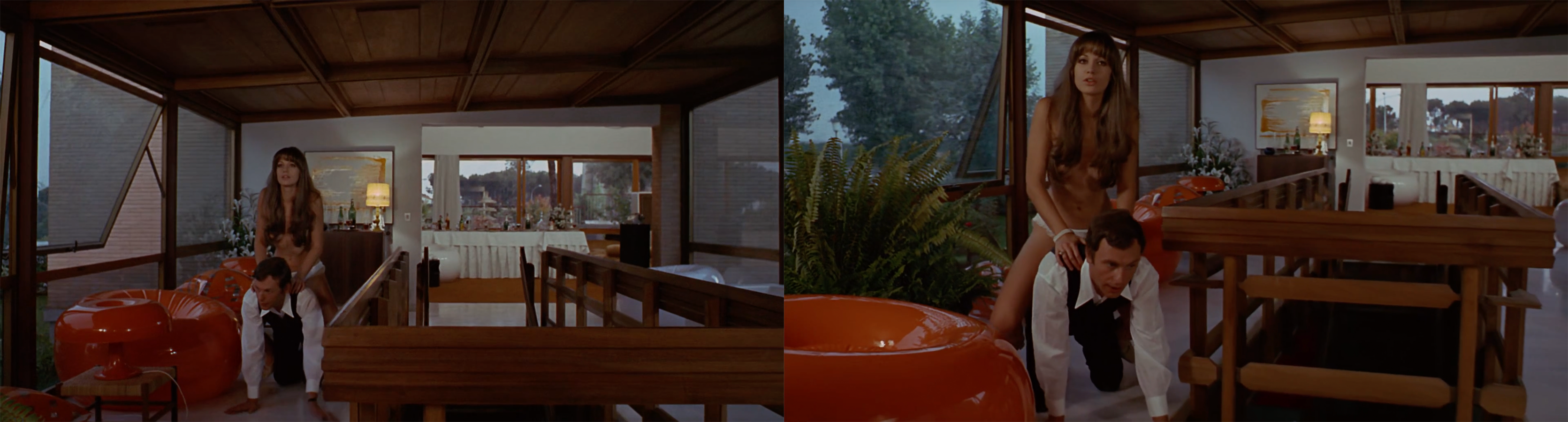
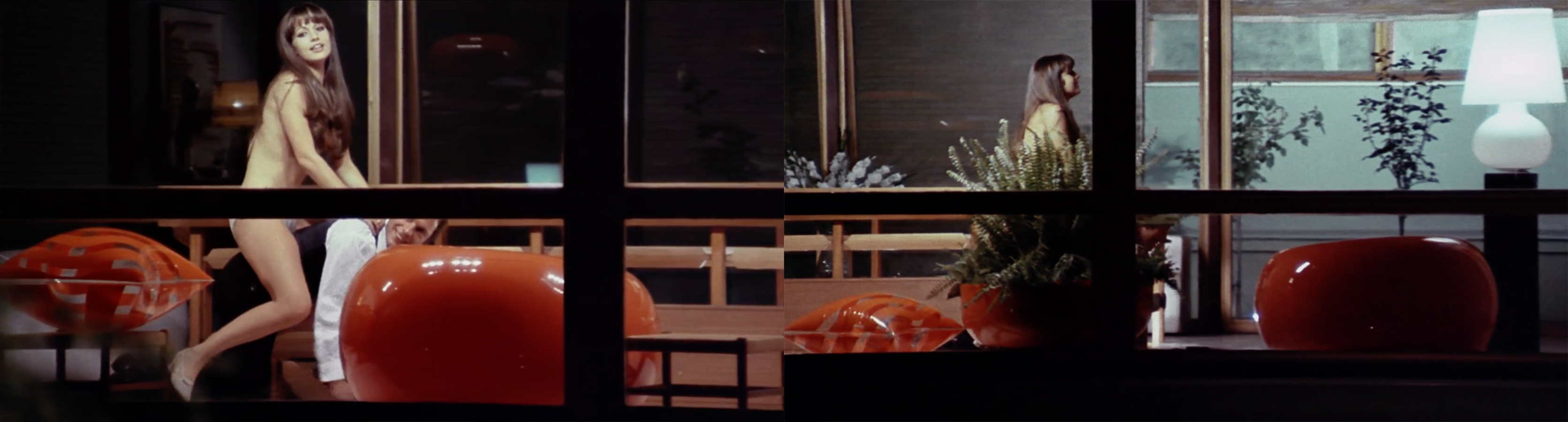
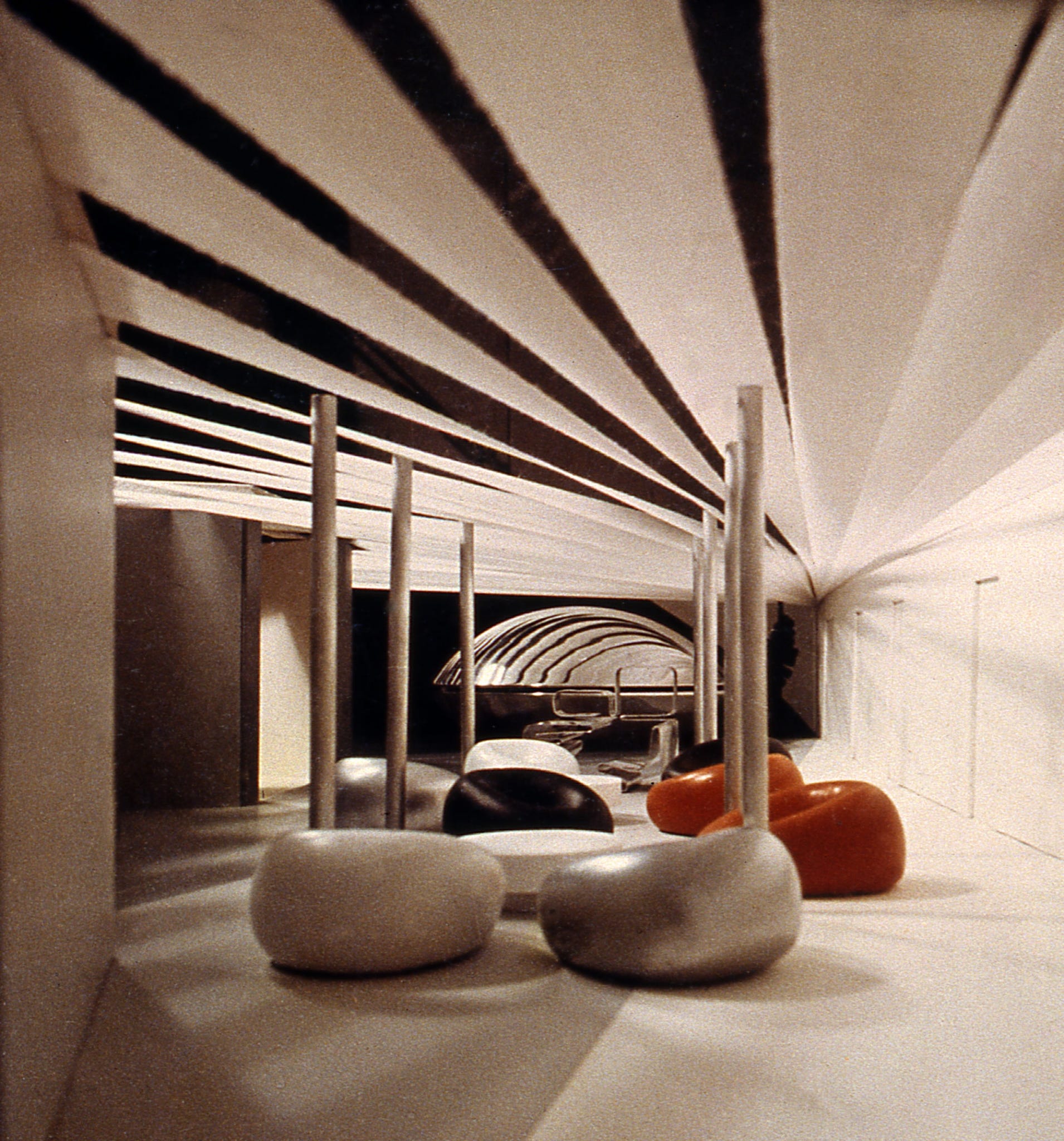
No solid ID on the inflatable poufs but they do bear a slight resemblance to these pieces by Bernard Quentin for the NY World’s Fair in ‘64.
I have a feeling the striped orange inflatable pillow might be Mass Art Products by Philip Orenstein.
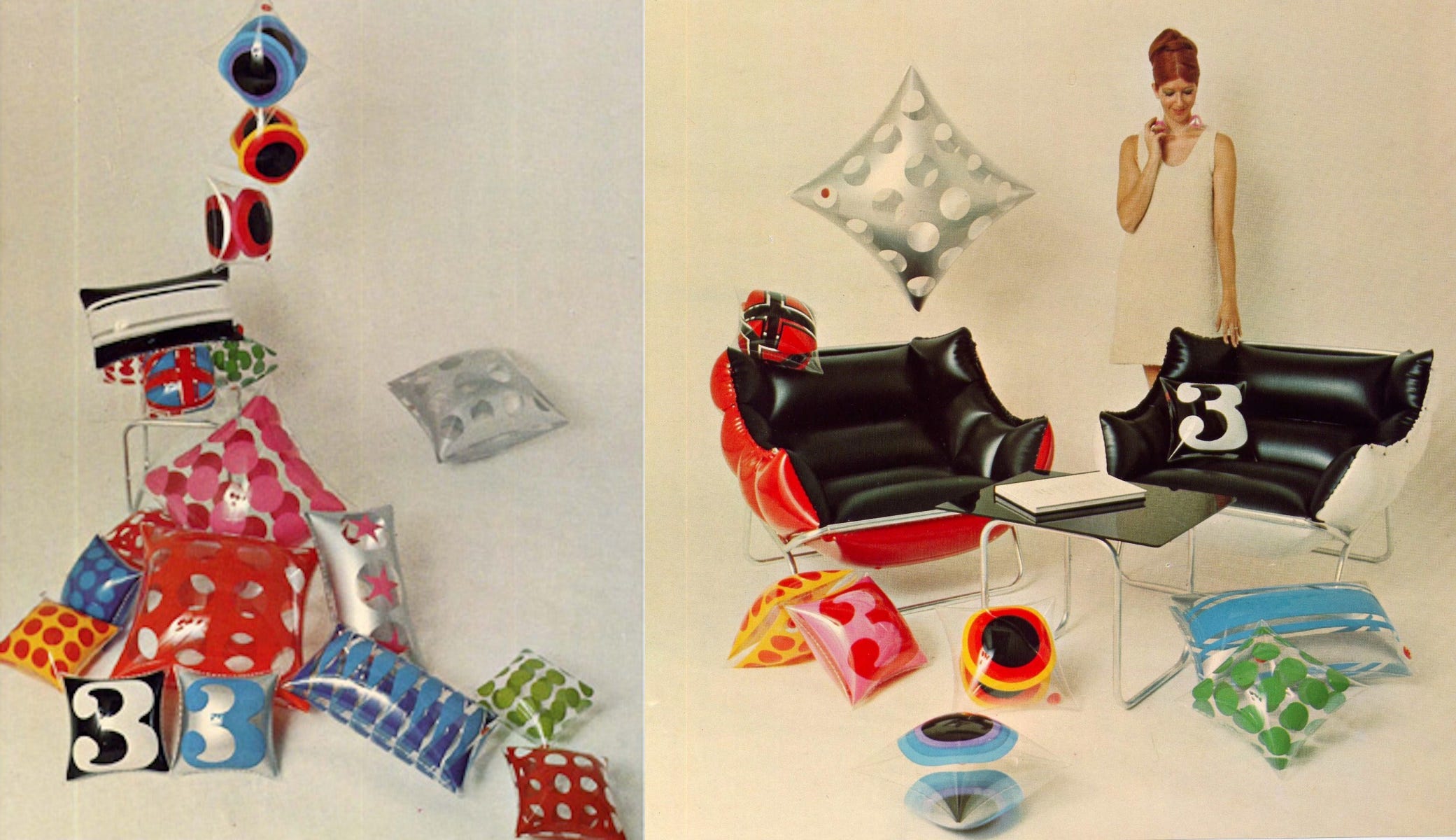
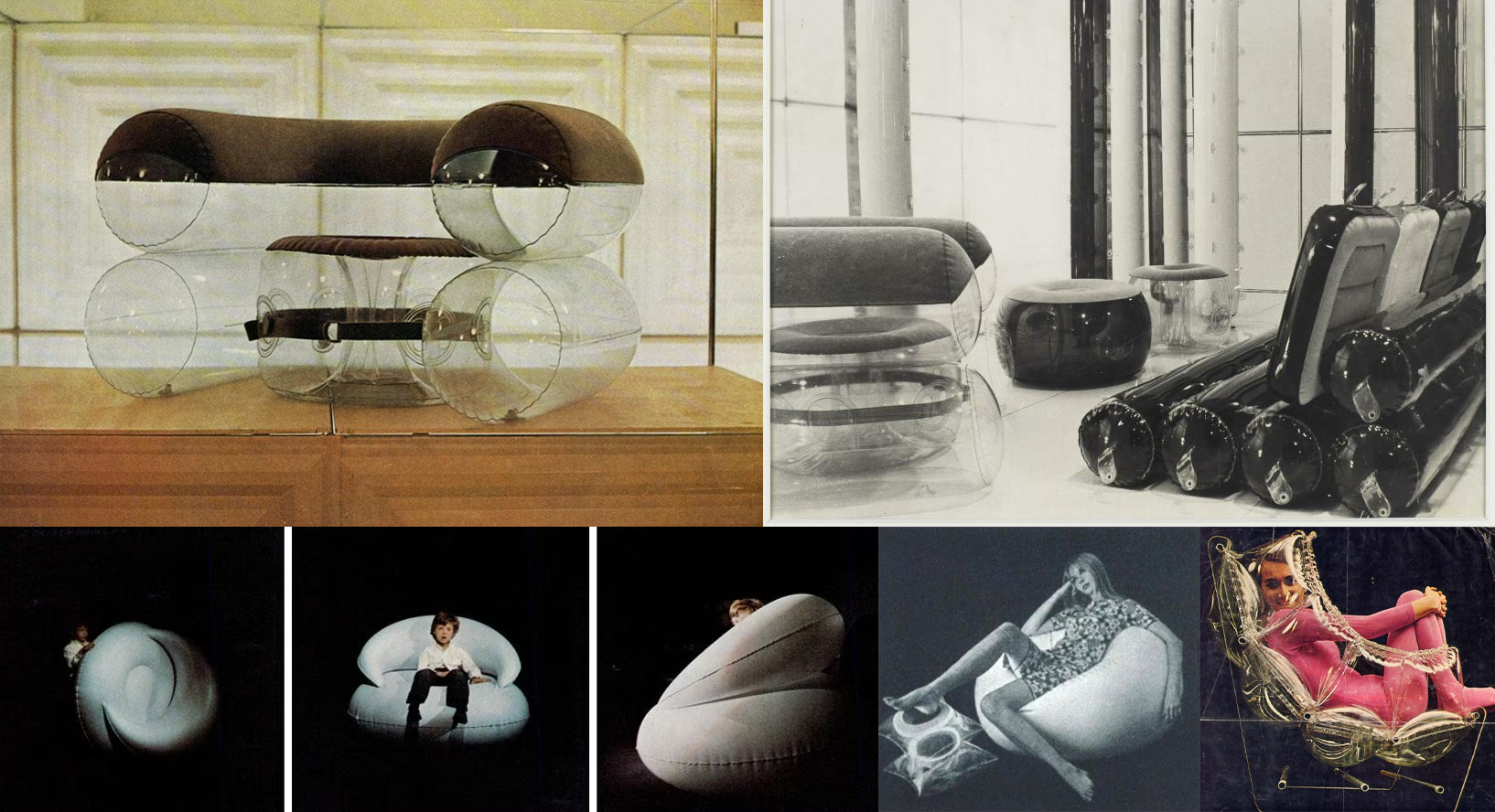

By the early seventies the blow-up furniture craze started to deflate as people realized the PVC would yellow, seams would split, cushions would leak… the fantasy of floating on air ultimately shook out to be a case of style over substance. Molded hard plastics on the other hand would hold their ground for decades to follow despite their own set of material limitations.
Have a look at some images from one of my favorite coffee table books — longtime Bloomingdale’s window decorator Barbara D’Arcy’s Bloomingdale’s Book of Home Decorating from 1973.


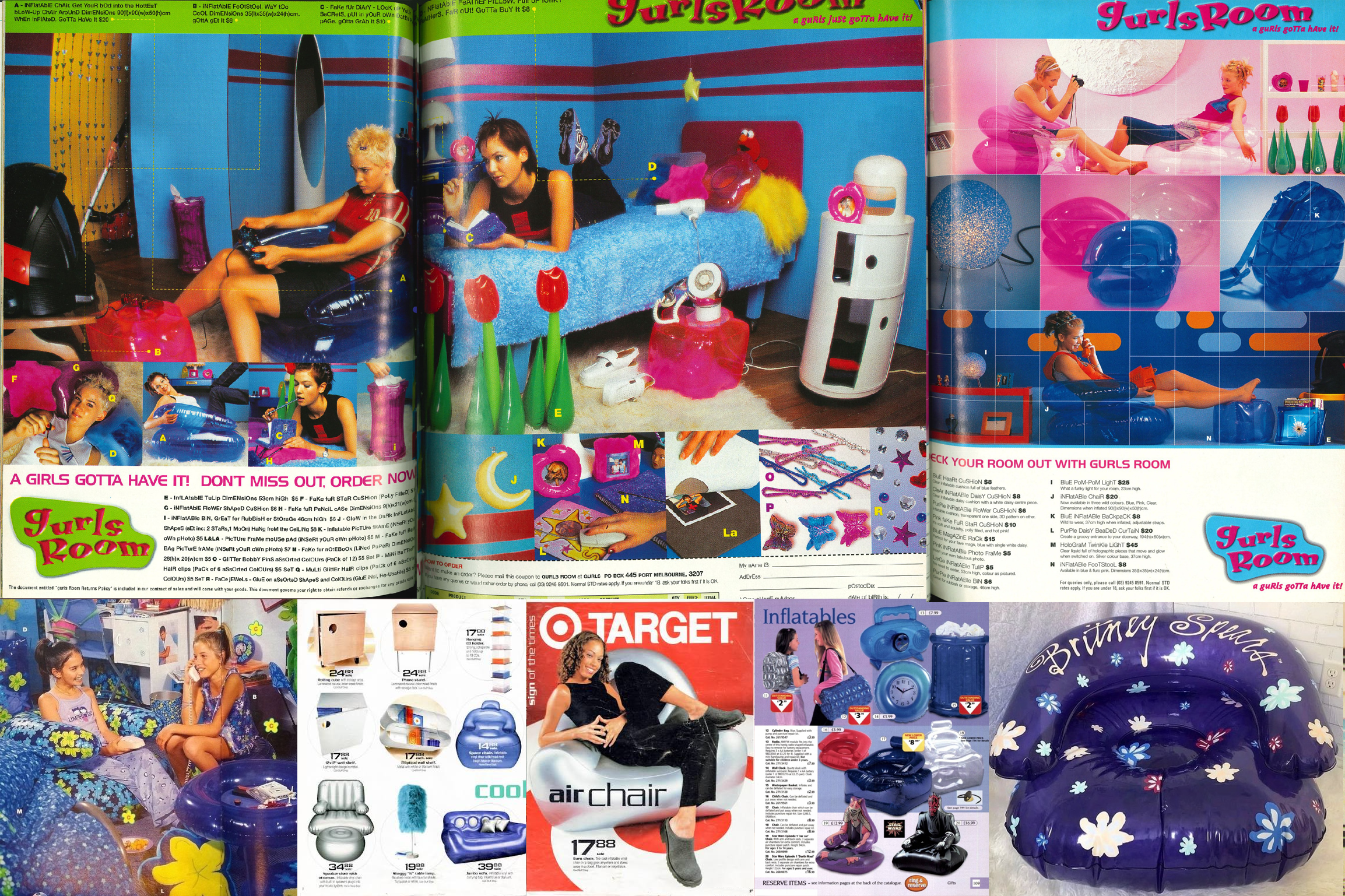
Of course, my fellow millennials will remember that the tides shifted back in the late 90s and early 2000s to a brand new inflatable era, especially targeted at the pre-teen/teen girl demographic. A design bubble once burst was blown right back up again 🫧🫧🫧

Movies mentioned in this post:
L’Écume Des Jours (1968), dir. Charles Belmont
Camille 2000 (1969), dir. Radley Metzger
Barbarella (1968), dir. Roger Vadim
The 10th Victim (1965), dir. Elio Petri
La Matriarca (1968), dir. Pasquale Festa Campanile
Until next time!
xo Mona
In the original French with no subtitles and not through any licit channels 😅
A testament to the inaccessibility of Khanh’s luxury objects vs the availability of mass-produced commercial items via Zanotta et al?
fascinating, i love
Ah such a good one! Love all of the visuals and, as always, learned so much ♥️